
Polk Projected Versus Actual Release
A projected release date is an estimate for an active sentenced prisoner. It is calculated from the sentence and the corrections system’s current data. It does not prove that the person left custody. An actual release date records an event that already occurred. Even then, the event can mean community release, transfer to another custodian, or release from prison to post-release supervision. The label and source matter.
A Polk County pretrial detainee ordinarily has no sentence-based forecast. Release may depend on posting bond, a dismissal or other court order, the resolution of a hold, or a later judgment. Citizen Connect shows current confinements and admissions, but Polk does not publish a projected-date field there. A person disappearing from the live list is not enough to calculate or confirm a date.
A locally sentenced detainee and a state prisoner also need separate treatment. Polk detention may maintain a computed local date based on the judgment and credit it received. NCDAC computes the state term after intake. Research found no public Polk formula or calculator, so a state projected field should never be copied onto a county-only confinement.
- Projected date
- An approximate future date based on the current sentence computation.
- Actual release
- A recorded departure from a specific custodian after it occurs.
- Parole eligibility
- A date when an eligible legacy case may be considered, not a promised release.
- Discharge
- The formal end of a custody or supervision status.
Find Polk Projected Release Dates
First identify the custodian. A person at the Polk County Detention Center may be awaiting trial, serving local time, or waiting for transfer. A person in NCDAC custody has a DAC offender record. A county booking number and a DAC offender number are separate identifiers. Starting with the wrong system can produce no result or a date from an unrelated episode.
- Check whether the person is in Polk County custody or NCDAC custody. Use the agency named on the latest reliable record.
- For a state prisoner, open the NCDAC Offender Public Information Search and enter the DAC number when known.
- Otherwise, search by name and narrow with date of birth, age range, and other available details. Compare several identifiers before selecting a record.
- Open the matching active-inmate record and locate the field labeled “Projected Release Date.” Compare it with the sentence entries and current status.
- For a locally sentenced person, ask Polk detention for its computed date and obtain the court judgment. No public Polk calculation tool was verified.
- For a pretrial person, check bond, orders, holds, and case events instead of seeking a prison-style forecast.
- After the forecast passes, look for an actual release entry and confirm with the agency that held the person.
The NCDAC OPI search form supports status, name, offender number, birth, age, and demographic filters.
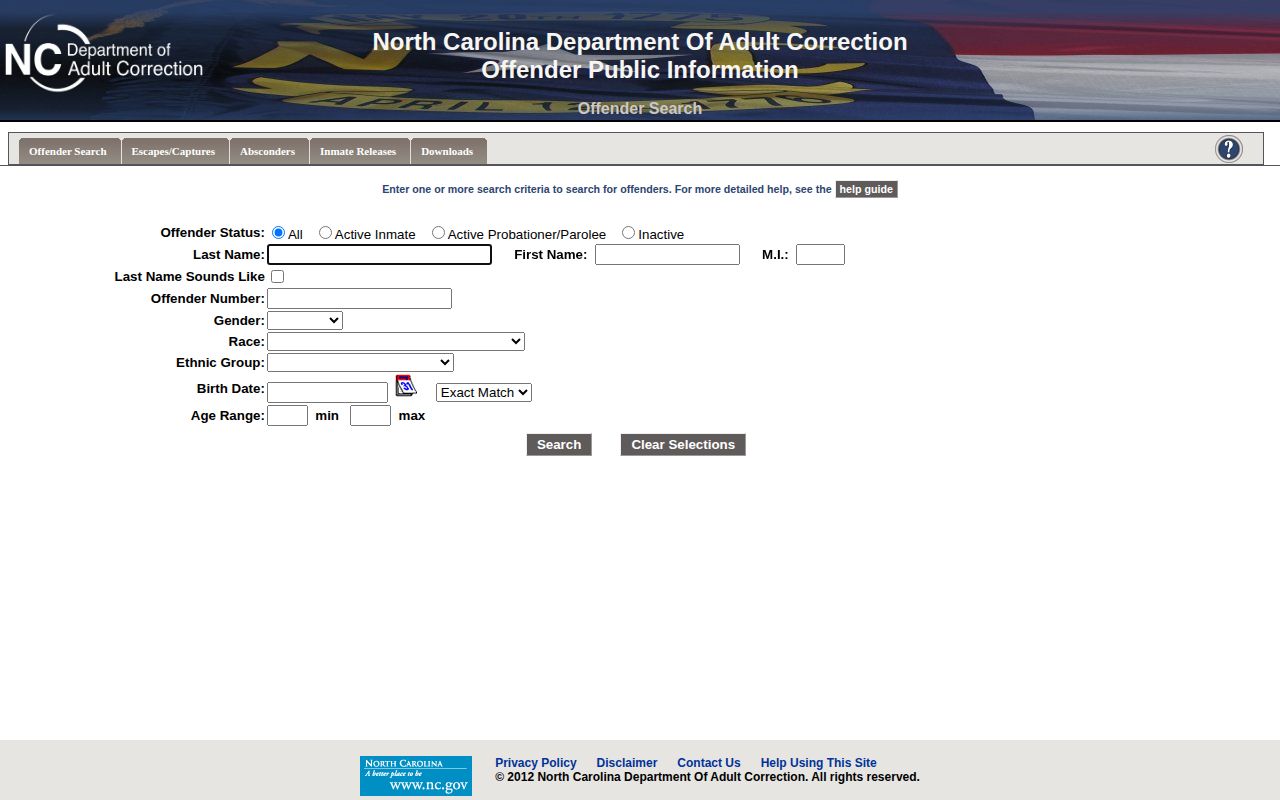
Those fields help locate a state record, but OPI expressly excludes an ordinary Polk County jail-only episode. The Polk County released inmate search covers the local release-record route when state OPI is not the right source.
North Carolina Earned Time
For Structured Sentencing offenses generally committed on or after October 1, 1994, North Carolina requires service of the minimum term. G.S. 15A-1340.13(d) states the core rule: earned time may reduce the maximum term, but never below the minimum. G.S. 148-13 directs NCDAC rulemaking for earned-time awards and forfeitures. The minimum and maximum sentencing tables and formulas appear in G.S. 15A-1340.17.
NCDAC often summarizes this framework as serving 100 percent of the minimum and at least 85 percent of the maximum. The phrase must be used with care. It is not a universal promise that each person will leave on an 85-percent date. It does not apply as a forecast to an unsentenced Polk detainee. It is also not the federal good-conduct rule. Offense date, sentence class, special formulas, consecutive terms, and exceptions can change the analysis.
Older Fair Sentencing cases follow a different path. NCDAC describes gain time, one-for-one good time for good conduct subject to forfeiture, and possible merit time. Some older sentences may also involve legacy parole. A reader should use the legal framework tied to the actual offense and sentence rather than applying the newer summary backward.
Legacy parole eligibility is another date, not an automatic exit. The Post-Release Supervision and Parole Commission reviews eligible older cases under G.S. 15A-1371. North Carolina does not publish an ordinary formal-hearing calendar for that process. Commissioners independently review files, and case-specific eligibility rules vary. A parole review date or eligibility point must not be reported as the person’s projected release date.
Note: Earned time changes the computation within state law; it cannot reduce a Structured Sentencing maximum below the imposed minimum term.
Why Polk Release Forecasts Change
NCDAC warns that a projected date is approximate. Assignment to or removal from a prison program, transfer, discipline, or program completion may change the calculation. Legal and administrative events can also alter the controlling sentence data. A changed date should not be attributed to one cause unless the person’s record or the responsible agency documents it.
| Factor | Possible effect | Best source |
|---|---|---|
| Earned-time posting | May reduce the maximum within the statutory floor. | NCDAC sentence computation. |
| Discipline or forfeiture | May remove credit and move the forecast later. | NCDAC record for that event. |
| Program or work change | May alter the credit calculation. | NCDAC program and computation record. |
| Sentence correction | Can change the minimum, maximum, or credit data. | Court order and corrected NCDAC entry. |
| Concurrent or consecutive terms | Changes how multiple sentences combine. | Judgments and NCDAC computation. |
| Detainer, hold, or new case | May prevent community release or shift custody. | The issuing and holding agencies. |
| Parole or violation action | Can affect eligible legacy release or return a supervised person to custody. | Commission, court, and NCDAC records. |
A transfer can also create apparent date conflicts. The Polk sheriff may record departure from the detention center, while NCDAC records intake on a later date. Both can be correct because transport and intake are separate events. Label each date with the system that created it.
Administrative updates can also change what the public sees without proving a new legal event. If yesterday’s forecast differs from today’s, preserve the field label and date checked, then seek the current computation from NCDAC. A public viewer should not guess that discipline, program completion, or a detainer caused the change. Those are possible factors, not facts about a named person until documented.
Confirm Polk Actual Release Dates
A forecast becomes historical proof only when the responsible agency records an actual event. For a state prisoner, return to OPI after the expected date and look for an actual release entry or inactive history. Use NCDAC’s public-record channel if the public fields conflict. For a Polk jail confinement, ask the sheriff for the release date and time, release method, releasing authority, and destination agency when a transfer occurred.
NC SAVAN can send a custody-change alert, but the notice should be checked against the source agency. The Polk County VINELink check explains registration with both a county offender ID and DAC ID when both exist. That dual registration matters when Polk transfers someone into state custody because the county and state events can arrive at different stages.
The NCDAC Victim Support page uses the exact phrase “projected release date” and explains why the estimate can change. Its official release-date guidance is shown below.
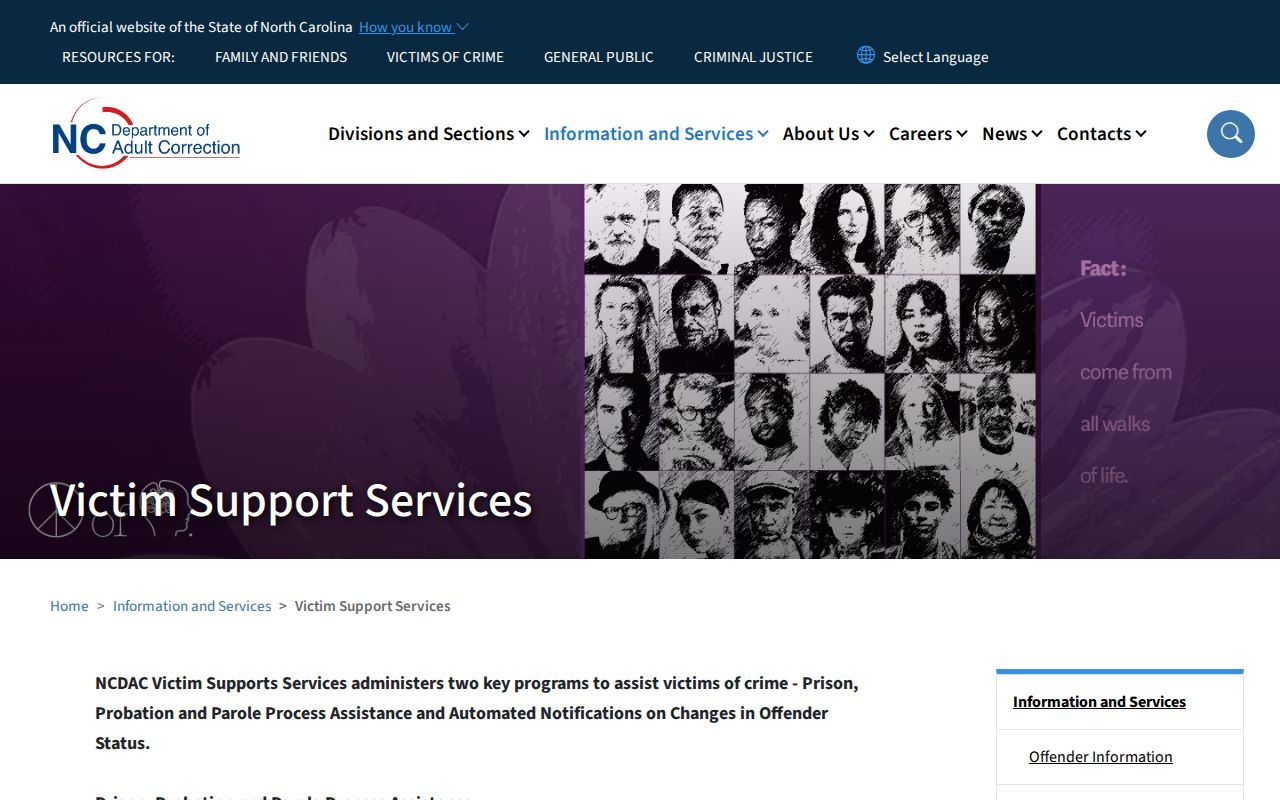
The state guidance supports treating the displayed date as an estimate and using a later custody event to verify what actually happened.
Polk County Versus State Dates
Polk County does not publish a county good-time formula, weekend-release rule, or local projected-date calculator. That negative finding limits what can be claimed. Detention staff can provide an existing computation for a locally sentenced person, while the court judgment states the sentence and credits ordered. Visiting hours, roster admission controls, and facility capacity do not answer the release-date question.
The state path is different. Once a Polk detainee is delivered to NCDAC, OPI becomes the correct public search for state custody, sentence history, and any projected-release field. Leaving the Polk jail for NCDAC is a release from county custody, not freedom from confinement. The sheriff’s transfer date and the state projected date describe two distinct events.
A court order can explain bond, dismissal, time served, or commitment. It still may not show the moment detention completed administrative processing. The sheriff owns the local physical exit record. NCDAC owns state prison release and supervision data. Keeping these roles separate prevents a court disposition date from being reported as a jail-door date.
For a focused local inquiry, provide the full name, date of birth or booking number, and a narrow confinement range. Ask for the existing computed date if one is maintained, plus the later release date, time, method, and destination. The sheriff need not create a new calculation or legal analysis. When a fee may apply, request an estimate before extensive work because Polk publishes no fixed fee or guaranteed response time.
Past Polk Projected Dates
A projected date that has passed is not proof of release. Recheck the current NCDAC record and look for a dated actual release entry. Compare any SAVAN event and ask NCDAC when the public status remains active or appears inconsistent. Do not select a convenient reason such as earned-time loss or a detainer without support in that individual record.
If the person instead remained at the Polk County Detention Center, check the sheriff record, court case, and any active holds. A pretrial case can change through a new order, an additional charge, or another custodian’s process without ever producing a prison-style forecast. The date question must follow the actual custody path.
A confirmed state prison release may begin post-release supervision. An “Active Probationer/Parolee” OPI result is community supervision, not active prison confinement. The eventual supervision discharge date is another event and should not be merged with the prison release date.
For a Polk County record, preserve the source label when saving a date. Note whether it came from the sheriff, court, OPI, or SAVAN and whether it was called projected, actual, release, transfer, or discharge. That small step makes later changes easier to reconcile and prevents one agency’s date from being assigned to another agency’s event.
Note: Release, transfer, prison intake, projected release, actual release, and supervision discharge are separate dates that may all appear in one history.