
Polk Parole and Probation
A Polk County release can lead to several forms of community supervision. Probation is part of a sentence imposed by a court. It may follow a jail term, replace active confinement, or accompany other terms in the judgment. Post-release supervision is a statutory period after release from a North Carolina prison sentence under Structured Sentencing. Legacy parole is a conditional release route for people whose offenses remain eligible under older law, plus limited categories such as certain misdemeanor DWI cases. None of these labels means the person is still confined at the Polk County Detention Center.
The North Carolina Post-Release Supervision and Parole Commission sets post-release conditions, handles eligible legacy parole decisions, and may modify or revoke supervision. Field supervision is reflected through the North Carolina Department of Adult Correction, or NCDAC. The court remains the source for the probation judgment. These roles explain why one record may show the sentence while another shows the current supervision status.
| Status | How it begins | Best public check |
|---|---|---|
| Probation | A judge orders community supervision as part of a sentence. | Polk court judgment plus NCDAC OPI status. |
| Post-release supervision | State law requires supervision after qualifying prison release. | NCDAC OPI and Commission records within public limits. |
| Legacy parole | The Commission conditionally releases an eligible person under older sentencing law. | NCDAC history and the Commission. |
- Discharge
- The formal end of a custody or supervision status.
- Absconder
- A person whom the supervising agency records as unavailable to supervision.
- Revocation
- An official action that ends community supervision and may return a person to custody.
- Detainer
- A request or hold from another authority that may affect custody or release.
Verify Polk Post-Release Supervision
The official public route is the NCDAC Offender Public Information Search, often called OPI. It includes current and historical state prison, probation, and parole records dating to 1972. It does not contain every ordinary Polk County jail booking. Search by the stable DAC offender number when available. Otherwise, combine a name with date of birth or age range and other identifying details. A matching name alone is not enough.
- Choose “Active Probationer/Parolee” in OPI when checking current supervision. Use “Inactive” when researching a past supervision or discharge.
- Enter the DAC number if known. If not, search the full name and narrow the results with birth or age information.
- Open the matching state record. Compare the DAC ID, date of birth, county, case, sentence entries, and status before drawing a conclusion.
- Read “Active Probationer/Parolee” as active state community supervision, not prison custody. Review the history for a prison release date when that event matters.
- Check the Polk County court judgment for the legal terms of probation. Use the Commission for eligible parole or post-release questions within public disclosure limits.
- Confirm a claimed end of supervision through an inactive status, a dated discharge entry, or a response from the record custodian.
The public OPI form shows the practical filters available for this check. The official NCDAC search page is shown below.
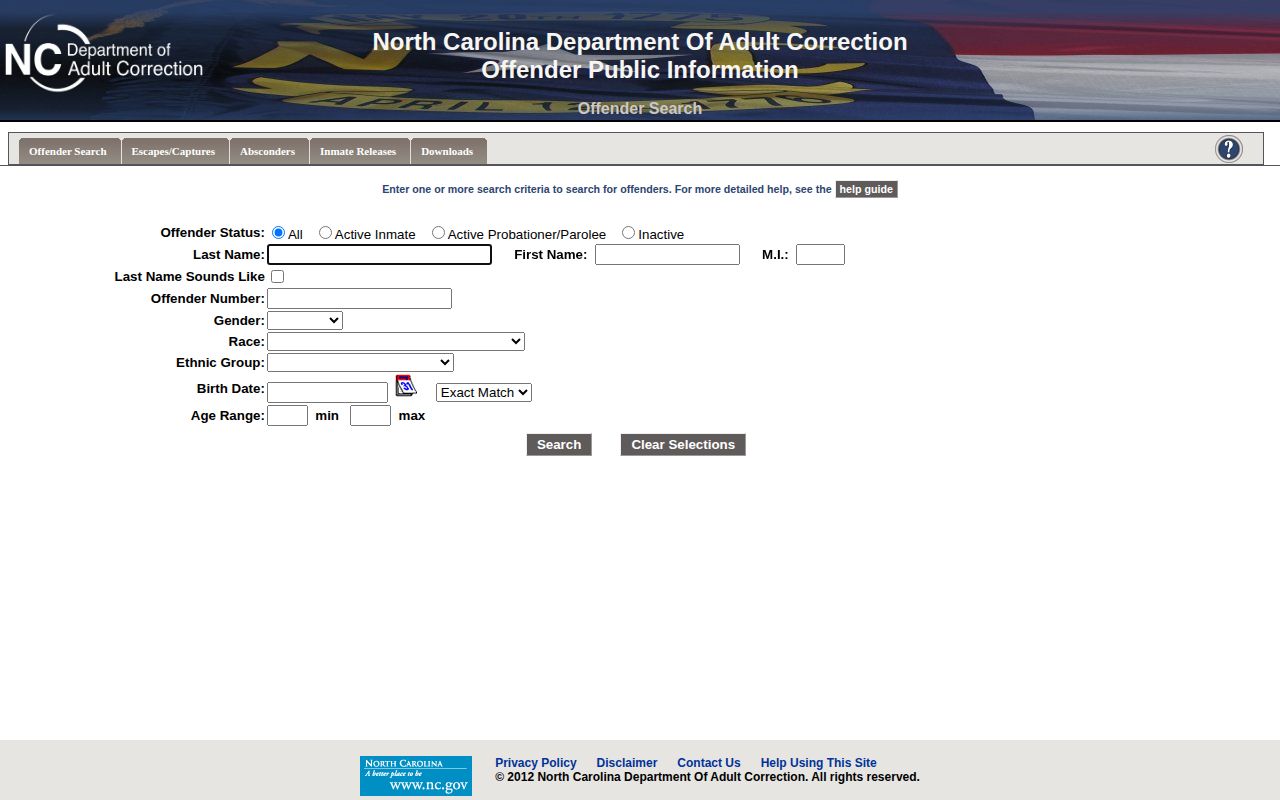
Its separate active-inmate, active-supervision, and inactive choices help keep a prison status distinct from a Polk County parole or probation status.
Note: An inactive OPI record needs its history read carefully because “inactive” alone does not state the exact reason supervision ended.
Polk Supervision Record Contacts
Research did not establish a published local Polk County field-office address or direct officer line. It would be inaccurate to invent one or send a reader to the county jail for a state supervision file. The Commission is the verified agency contact for post-release conditions and eligible parole matters. NCDAC is the proper custodian for state prison and community-supervision records. Detailed officer notes and much of a supervision file are restricted under North Carolina law, so a public inquiry may yield less than the OPI summary.
Post-Release Supervision and Parole Commission
2020 Yonkers Road, 4222 MSC
Raleigh, NC 27699-4222
Phone: 919-716-3010
Fax: 919-716-3987
Email: Parole.Commission@dac.nc.gov
For a public state record beyond the online result, use the NCDAC public-record request route. Ask for an existing releasable record tied to the DAC number. A Polk court judgment belongs with the Clerk, while the sheriff owns the county jail exit or transfer record. Sending each question to the office that created the event reduces conflicting answers.
Polk Absconder Status Checks
Conditions are rules attached to probation, parole, or post-release supervision. A court sets probation terms. The Commission sets or changes post-release and eligible parole conditions. A violation is an alleged breach of those terms, not automatic proof that the person is back in custody. Formal action may include modification, arrest, a hearing, or revocation, depending on the legal path and facts.
The NCDAC Absconder Search is a narrow supervision-status lead. “Absconder” means NCDAC has recorded the person as unavailable to supervision. It is not a live address, an arrest-warrant database, or proof of current confinement. Verify a warrant through the issuing court or law-enforcement agency. If custody is the question, check the agency that may now hold the person.
The official absconder form illustrates that this is a state supervision search, not a Polk jail release list. Its source page appears below.
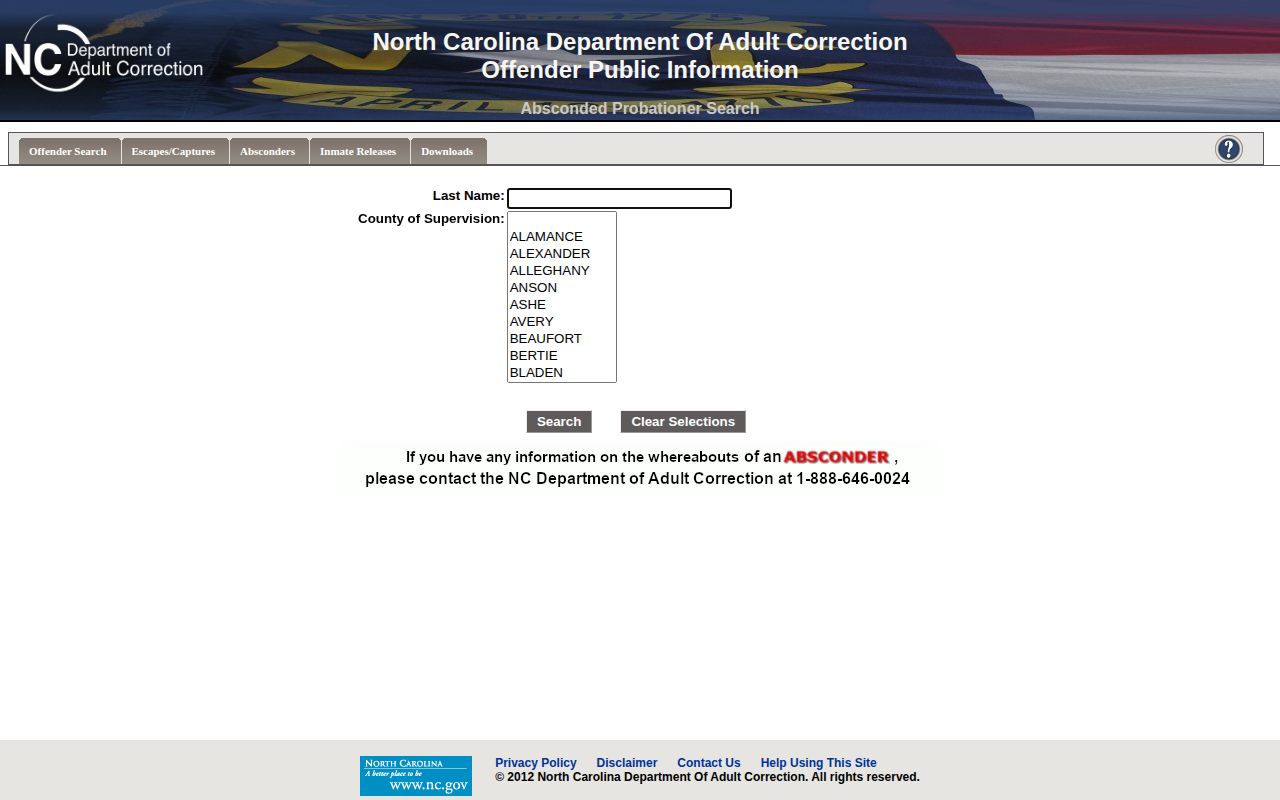
A result should prompt confirmation with NCDAC and the court, while a no-result should not be treated as proof that supervision ended.
How Polk Supervision Ends
Supervision can end through completion and discharge, court action, Commission action, or another event authorized by law. The precise route depends on whether the person was on probation, statutory post-release supervision, or eligible legacy parole. A jail release date is not the same as a supervision discharge date. Likewise, a prison release can begin post-release supervision rather than end all state control.
Use the current OPI status and history first. Then compare the court judgment for probation or the Commission record for parole and post-release supervision. Article 84A of Chapter 15A supplies the state framework for post-release supervision. Structured Sentencing generally governs offenses committed on or after October 1, 1994 and ended ordinary parole for those cases, apart from limited exceptions. A dated public record carries more weight than an assumption based on elapsed time.
The Polk County released inmate search paths explain how the sheriff release sheet, court file, and NCDAC history fit together. That distinction matters when a person completed Polk jail custody but remains active with NCDAC.
NC SAVAN can also carry probation and post-release events supplied by the state. An alert is useful notice, but it does not replace the dated NCDAC status or Commission record. When the person has both a Polk jail number and a DAC number, registration under both identifiers helps preserve the sequence from county release or transfer through later state supervision. The final discharge should be attributed to the agency that entered it.
Note: Supervision records can be restricted, so a public status result may not include officer notes, violation detail, or confidential reasons.
Polk Release Property Records
The Polk County Sheriff’s Evidence/Property Division has a documented process for investigative, found, or safekeeping property. It releases such property Monday through Thursday during normal business hours. Photo identification is required, proof of ownership may be needed, and a known-owner letter supplies a 30-day pickup window. Those facts come from the official Evidence/Property page.
That process is not a published rule for personal belongings held during detention. Someone leaving the Polk County Detention Center should contact detention about jail-held items and should not assume the evidence counter has them. The same custodian rule applies to record errors. A sheriff booking or release error goes to the sheriff. A court judgment error follows the court process. A DAC supervision-history error belongs with NCDAC. Correcting one system may not update the others.
This distinction has practical value after release. Photo identification may be needed to retrieve some property, yet the public sources do not establish a special Polk County procedure for replacing identification lost during custody. State supervision staff can explain a condition or approved reporting step, but they are not the sheriff’s property custodian.
Polk Legacy Parole Review
North Carolina does not publish an ordinary parole hearing calendar or a searchable decisions database. That is not a missing local page. The Commission explains that commissioners independently review eligible legacy files and that a majority vote controls. It does not conduct formal group hearings or personally meet offenders in the usual review process. A limited video-review exception exists for specified juvenile-life matters.
The review schedule also differs by case type. Eligible legacy cases are generally reviewed each year after eligibility. First- and second-degree murder cases are generally reviewed every three years, while sexually violent offenses are reviewed every two years. Denial reasons remain confidential. Interested parties may receive notice of denial and the next review, and notice also follows an approval. Publicly supported process outcomes include denied, investigation or further consideration, and approved.
The official Commission page shown below documents its role in this North Carolina process. The source should be used in place of any claimed Polk County hearing calendar.
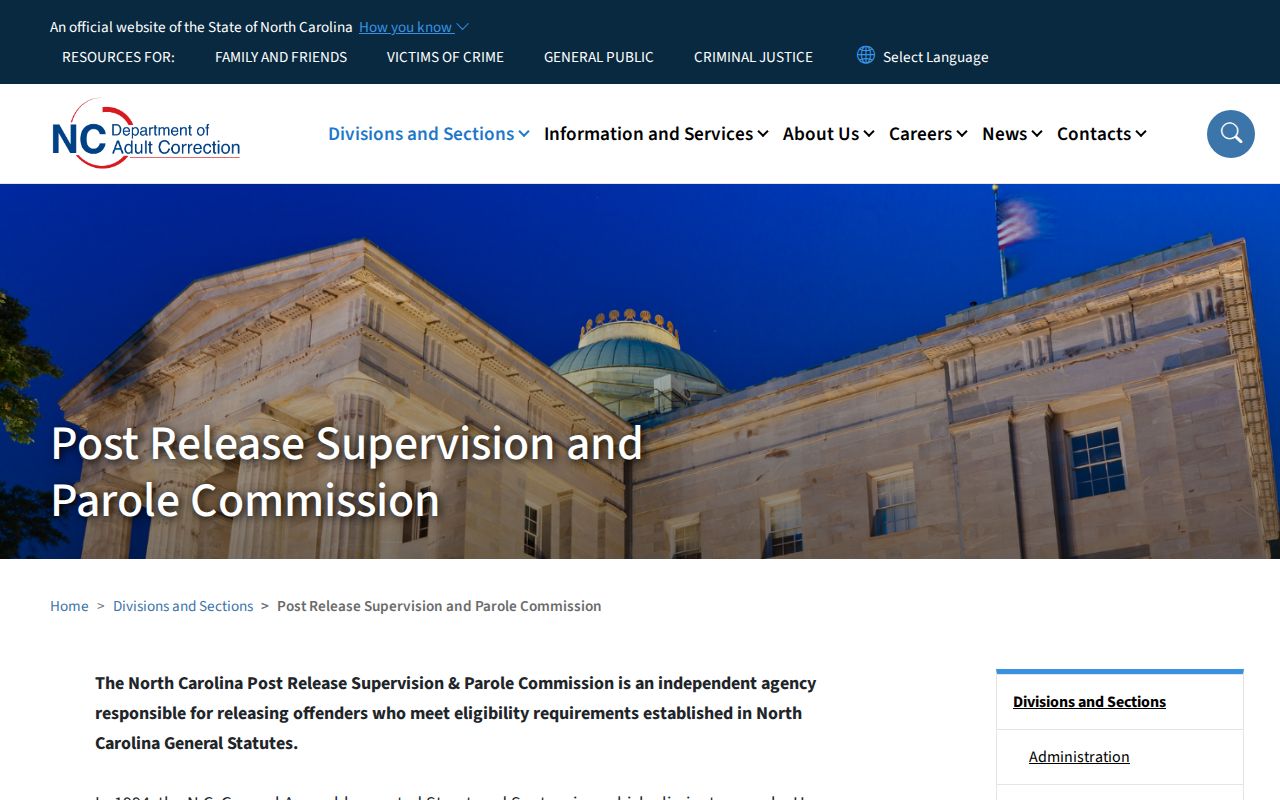
For an individual record, use OPI and contact the Commission. G.S. 15A-1371 controls eligibility for legacy and limited DWI cases, with rules that vary by offense and sentence. A broad date formula would be misleading.